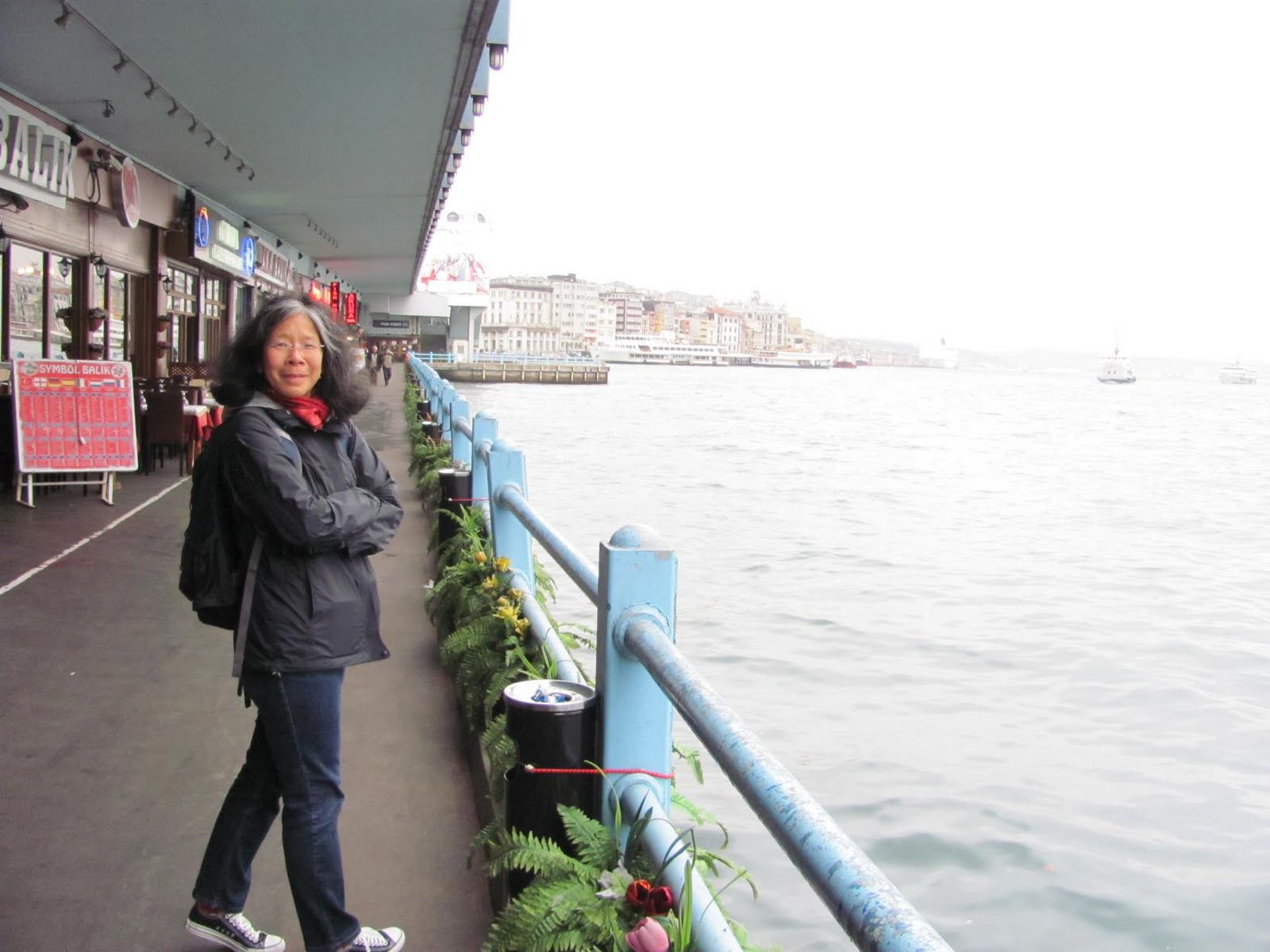
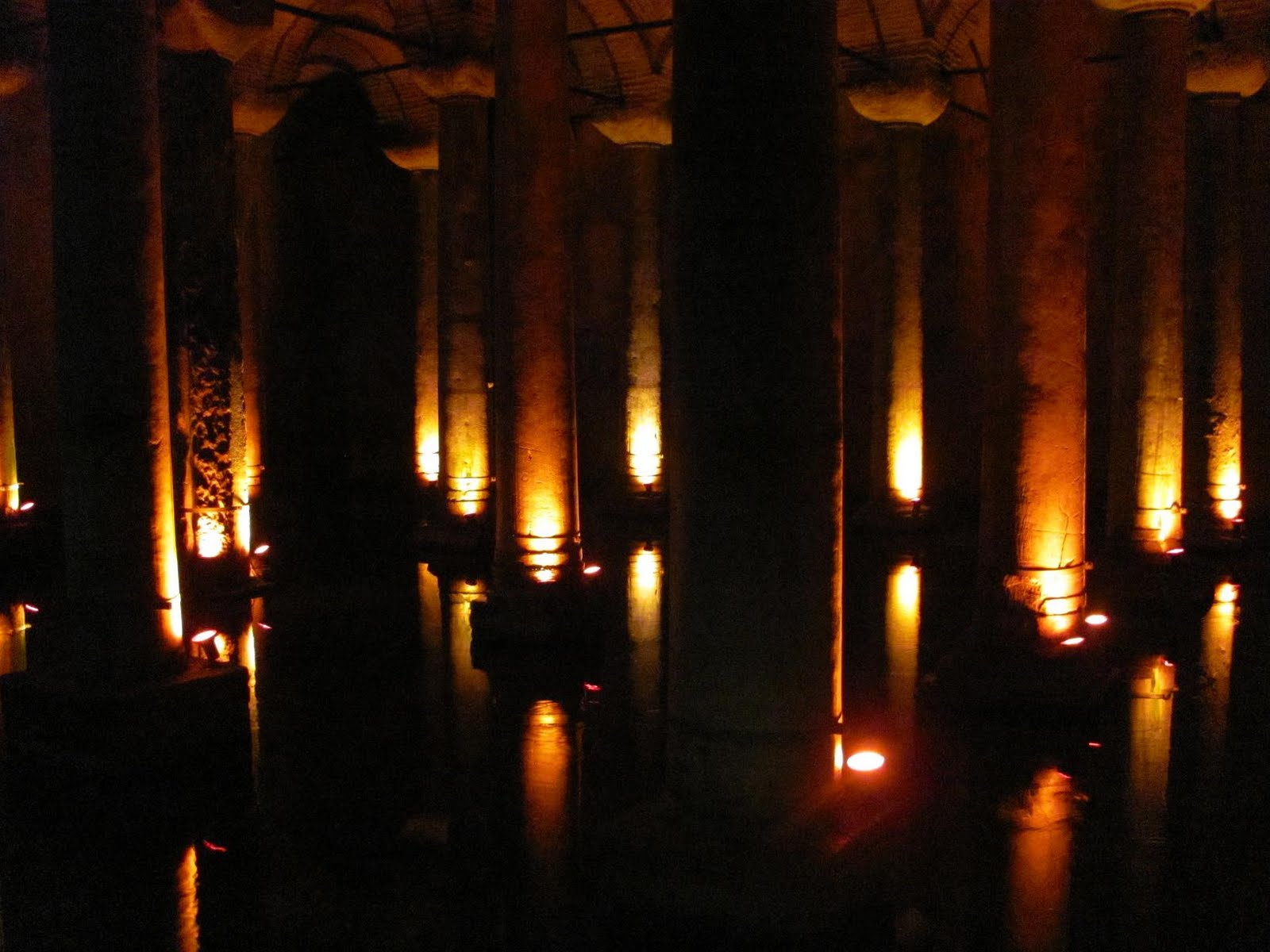
Two of the more economically impressive fluids man has managed and shaped to his own ends are the ones which keep Abu Dhabi afloat today and the one that put parts of Portugal on the map centuries ago: oil in the first case and port in the second. Without the first, Rose and I would not have been able to enjoy the second quite so easily nor so much a couple of weeks ago when we visited Owen Sound friends, fresh from 800km of walking the Camino de Santiago, in Porto, Portugal.
 We'd only been home from a wonderful two day workshop on middle and high school literacy at the American School in Abu Dhabi for four days when the final Eid holiday came and we were off to Portugal. I was hardly over my exhausting jetlag-all-night flight and drive back to Yanbu-and-work experience when we had to do an all-night drive and fly trip to Portugal. I know I shouldn't complain when this job affords us this kind of travel, but it's still exhausting and keep in mind I'm not 57 anymore and can't do the things I used to do, or at least not do them with such vim as I used to. But I digress. Abu Dhabi is for the most part a city state surrounded by a lot of empty land which covers a rich oil field discovered in the early 70s. Up to that point, all the place had to offer the world was sand and some nice looking waterfront property that could be got for a song, or maybe a couple of goats. Now, though, the city is astoundingly modern with construction going on at a pace that amazes. The buildings that emerge are on a scale and of shapes that seem the stuff of science fiction.
 The first thought that struck me after seeing all this was not just that oil is an overwhelmingly huge economic driving force--that has been obvious for decades--but that the powers aligned against anything that will stop or even slow down its influence are massive beyond massive and determined beyond any measure of determination man has yet imagined. Here's one set of figures that will make any rational person shake his head (or more likely her head): a native Abu Dhabian (probably male), according to an elderly Irish fellow I spoke to who seemed to know a hawk from a handsaw, inherits from the state when he comes of age 18 million dollars, that being his part of the countries' native wealth. Everyone gets this, as long as he is native blah blah blah. It's unreal. So think of the amount the government keeps and how much of that is going into buildings meant to attract multi-national banks, insurance companies, and the like. It may well be in our children's lifetime that the oil will run out, and when it does, places like Abu Dhabi risk becoming ghost towns. Yanbu, for instance, will become a ghost town, revert to what it was before oil was discovered here, and become little more than a repository for blown sand, empty plastic bags, and camel shit. There's already a deadening of the soul of what it once was. The home Lawrence of Arabia kept here is disintegrating into the sand on which it was built and sooner or later the economy will do the same.
 But you came to read about our travels, so enough of the geo-politics. Here are a couple of the sights from Abu Dhabi.
The next two are buildings we passed each day on our way to the conference. They are both very large and architecturally curious, as you can see. I have no idea what they are for except to say the one with the great swoop in it is attached to a massive sports complex which includes three separate soccer stadiums, running tracks, practice fields and so on. The soccer world cup is in Abu Dhabi soon, I think. Coudn't have had anything to do with the money; must be the summer weather.

 |
| The impressive swoop of some sort of building on the sports complex grounds. |
 |
| The view from our hotel on Yaz Island, looking north into the Persian Gulf. |
 |
| Faux elephant tusks made with carved camel bone. |
 |
| The old souk redone in solid teak screens. Stunning, but not old. |
 |
| A little spice shop with bags and bags of the stuff, including three different varieties of myrrh sap, hardened into beautiful quartz-like shapes. |
Portugal, on the other hand, has as many buildings empty, old, and ramshackley interesting as Abu Dhabi has teeming, new, and gleemingly interesting. However, flying via Casablanca can be somewhat depressing on Royal Air Maroc because of the flying habits of the regulars and the ineptitude of the employees at the Jeddah International Airport (not to mention the Casablanca crew not getting our bag onto the flight to Lisbon). Our flight was delayed by two hours with no explanation, announcement, or apology, even though the official screens indicating flight status said we were on time. But it also included a flight from several hours earlier indicated as boarding for seven hours. One official simply laughed when I asked about the screen and told me it is never right. Once on the plane, it takes the attendants about twenty minutes to get people into their correct seats after pointless arguments and discussions trying to explain to people how the boarding pass seat indicators are meant to be taken seriously. Baffling in the extreme why people think they can just sit anywhere. And getting off the plane is equally bothersome. Most of the native passengers throw food scraps, used kleenex, plastic wraps, forks and spoons, peanut shells, pillows, and whatever else they might no longer want to deal with onto the floor. Getting off involves stepping on earphones, soggy tissue, newspapers and the like. It makes you wonder. And there is always a handful of men who think that the stay-in-your-seat-and-don't-open-the-overhead-bins-as-the-plane-is-taxiing instruction actually doesn't apply to them. More than once we've seen a scramble for carry-on bags that a football linebacker might have trouble negotiating. This does not include the fear and trembling brought on by many of the young children who are rarely if ever strapped in and allowed to run about the aisles or stand up on the seats despite pleas from worried attendants.
But travel is so much about enjoying cultural differences that I guess I should somehow find the patience within me to see all of this as good old plain fun rather than mind-numbing idiocy. Thank goodness the Lisbon airport, our first port of call, had a spot where a fellow could get a glass of port, quickly. One good thing about flying out of Casablanca on a somewhat clear afternoon is the sight of the north African coast.
 |
| The Atlantic north of Africa crashes on the Moroccan coast at Casablanca. |

It could just as easily have taken its name from the gorgeous blue tile that is regularly evident when you walk around. Outside walls of churches and other buildings, interior walls of the central train station, and who knows what sort of places are decorated to great effect with blue tiles which more often than not tell a story or emphasize some historical event. But the visual effect one experiences coming upon such a sight unannounced is very very enjoyable, in a "Good Lord!" sort of way.
The beautiful church with the cross above the door is the Igreja (church) de Santo Ildefonso. It was constructed between 1724 and 1730, and the blue tiles are by Jorge Colaço (1932), depicting scenes from the life of St. Ildefonso, among other things.


So you can see how the walking was rewarding. The waterfront is another part of the old town worth spending time in. We ate very well, drank some beer and some port with a few locals, met street artists with interesting stories, and found some bargains, too. The harbour tour is well worth taking, a 45 minute ride up into the town and then back down again and out toward the Atlantic, all the while passing impressive bridges, steeply sloped housing, and the massive port cellars whose rooms stretch well back into the hills they are built on. Below is a selection of a few of the many photos I took of the Porto leg of our holiday.
 |
| A detail of one of the panels on the church below. |


 |
| This is inside the old train station! |
 |
| Another one inside the station. |
 |
| A close-up of one of the panels, including the face of a local 1960s hair-cut. |
 |
| One of our turn-a-corner surprises. |
 |

So you can see how the walking was rewarding. The waterfront is another part of the old town worth spending time in. We ate very well, drank some beer and some port with a few locals, met street artists with interesting stories, and found some bargains, too. The harbour tour is well worth taking, a 45 minute ride up into the town and then back down again and out toward the Atlantic, all the while passing impressive bridges, steeply sloped housing, and the massive port cellars whose rooms stretch well back into the hills they are built on. Below is a selection of a few of the many photos I took of the Porto leg of our holiday.
 |
This type of cobbling often goes on for several blocks or kilometres, in some cases. |
 |
Another of the many markets the city is known for. |
 |
| We found a hillside cafe looking out over the town towards the Atlantic and managed to enjoy a sunny hour admiring the view. |
 |
| Some local life. |
 |
| One of the more interesting examples of the graffiti found all over the city. |
 |
Another delicious meal along the harbour, this time at Lapin. |
 |
| Looking up towards the town centre from the harbour wall with more of the colourful tile, laundry, and religious iconography with which the city abounds. |
 |
Looking down at Lapin restaurant with the Eiffel designed bridge in the background. |
 |
You can see one of the famous port cellars just beyond the famous bridge as we stand on the famous harbour wall, famously. |
 |
| At the start of our port tasting, the prelude to many delicious moments. A not unpleasant way to spend an hour or two. |
 |
The centuries old gothic cathedral boasts some curious gargoyles. |
 |
| Life in Yanbu makes a picture of ham worth taking. |
We ended our time by driving along the coast to Lisbon, stopping at a seaside boardwalk along the way, and having a stunning Nepalese meal on a winding little street just off the centre square of the capital. It was a glorious holiday. My thanks to Andre Lyder, by the way, for suggesting I find poetry by Fernando Pessoa. Inspiring stuff.
 |
| The photo does not do justice to either the power or the size of the photo. Very little wind was blowing, but these whiteheadswere smashing their way in. One had to be wary. |
 |
| The main square, Rossi, in Lisbon from our rainy window. My, but it was a glorious sight. |
 |
I can almost always remember rooms I've stayed in which have made me both happy and comfortable. This one, for one night, four people, was perfect. Right in the heart of the city and overlooking the main square was excellent, and priced very cheaply. It is in both Rick Steve's and in Lisbon Top Ten and well worth it. And, dare I say it, the writing was on the wall. Thus the room's name: Escritor |
 |
It is deceptive, but this is a very steep cobbled street outside our window. Geoff drove the car up this thing and it was a bit like driving it up and over the Niagara Escarpment . . . really. But second nature to the locals. |
 |
| Rossi Square in the heart of the old part of Lisbon is a hub, day or night, of activity. We enjoyed the walk around and the odd little shop that had chosen not to be a tourist trap shop. A city I'd go back to in a moment, if for no other reason than the walking around. |
So that is our Portugal trip, and what a restorative it was after two and a half months in the desert. It isn't without irony I make this comment since the time spent teaching in this barren land is what afforded us the trip. On a sadder note, it is places like Portugal and Amsterdam and London which throw into stark relief the vast emptiness of this country, a country in fact rich in history but most of it ignored in terms of selling to tourists or even to the local inhabitants. Geographically fascinating but at the same time forbidding; culturally private yet interestingly mysterious, despite the closed doors and, to a western way of thinking, closed minds. It's a beautiful country in the same way the sea or the Arctic is beautiful, a beautiful sparseness, at least in the northern half where we live. But it seems determined to not allow for the richness that derives from an active commingling of different cultures, and it is a country full of the possibilities of different cultures; one third of its workforce is from somewhere else, a quarter of its population is foreign. Where Portugal and London are in many ways open, it is more natural (and who's to argue, really?) here for walls, gates, and manners to force a distance and a separation.